
Nat Rubio-Licht
Nat Rubio-Licht is a Senior Reporter at The Deep View. Nat previously led CIO Upside, a newsletter dedicated to enterprise tech, for The Daily Upside. They've also worked for Protocol, The LA Business Journal, and Seattle Magazine. Reach out to Nat at [email protected].
Articles
Can AI agents solve robotics' reliability gap?
Agents have been the hottest buzzword in AI this year. New tools from UC Berkeley and Nvidia may bring them to the physical world.
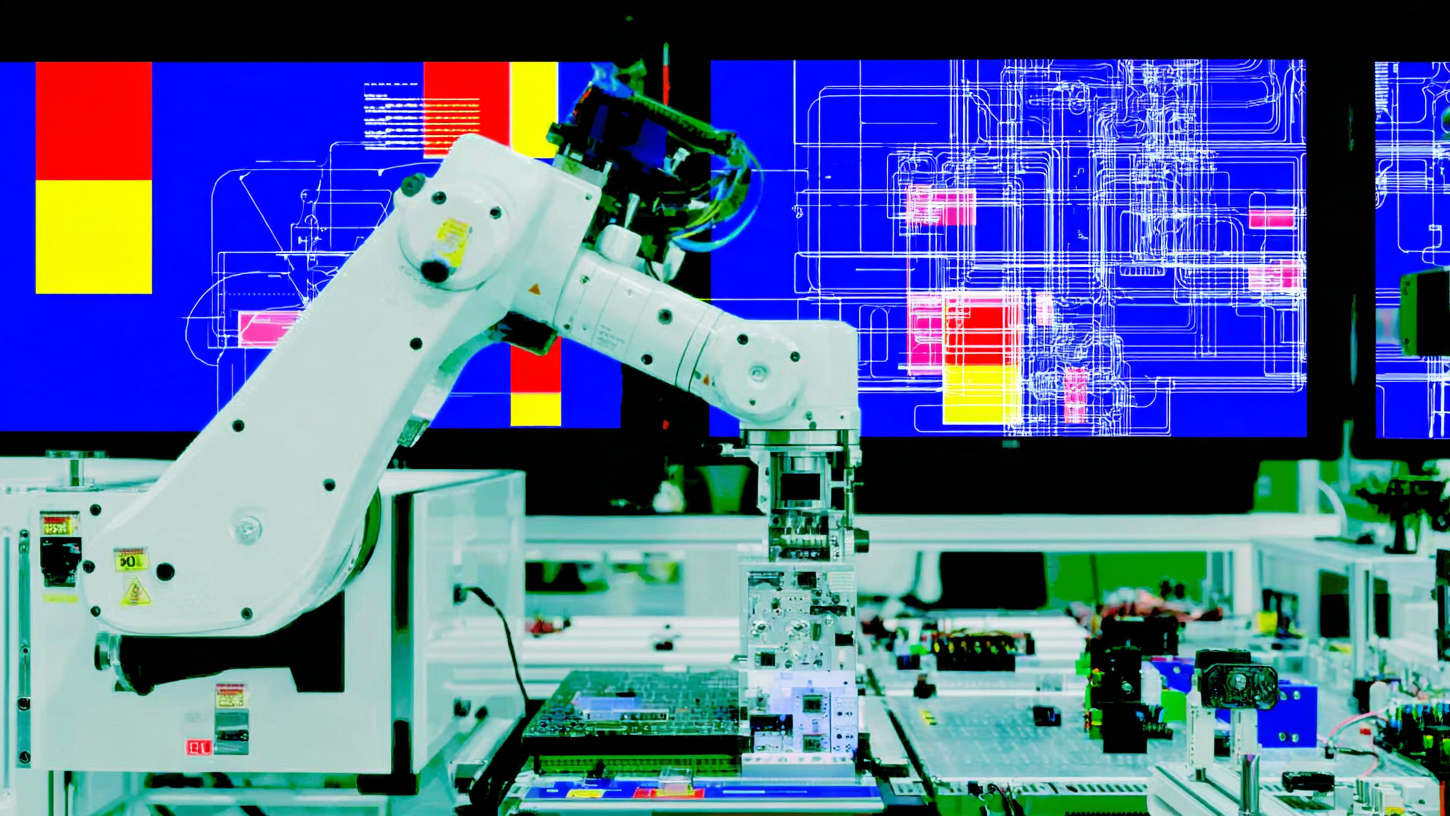
On Monday, the university announced new open-source research and benchmarks for "agentic robotics," an approach that brings agents into designing, testing and refining robotics systems for industrial tasks. UC Berkeley researchers designed this with Nvidia Isaac, the company's robotics simulation and synthetic data generation platform, allowing builders to develop robotics with less data.
The release includes two main components:
- Graph-as-Policy, or GaP, is a framework that lets agents generate, connect and test skills for robots to complete tasks. For instance, the system will segment skills such as finding an object, planning a grasp and moving the gripper without collisions into individual parts. The agent then connects these skills and uses Nvidia Isaac to simulate and rehearse them.
- VABAR, or Variational Automation Benchmark for Agentic Robotics, is an evaluation designed to measure a robot's capabilities at six types of industrial tasks under different conditions. This encompasses a range of tasks, including things like tool sorting and handing, syringe packing, and cable insertion and routing. Within this, a robot can simulate "contact-rich robot-object interactions" using Nvidia's simulation technology, which is then judged on Nvidia's Isaac Lab-Arena, the open-source policy evaluation framework.
Ken Goldberg, professor and distinguished chair in engineering at UC Berkeley, told The Deep View that the idea of agentic robotics is a fundamental shift from what many in robotics are doing, relying on a language model to write code for robots on the fly, rather than the current common paradigm of using data to improve vision-language-action models or world models. While this approach can complement those methods, it also provides its own alternative, he said.
This method could allow robots to actually scale in production by solving the challenge of reliability, as "data-driven" approaches, which require tons of real-world data, have hit a "plateau at 80% reliability," Goldberg said. "That's good enough for writing research papers and for people to declare that as state-of-the-art, but the industry is not happy with that, and it's not enough … for an industrial application."
Additionally, while this is scoped towards industrial use cases for now, Jim Fan, director of AI and distinguished research scientist at NVIDIA, told The Deep View that it's a "general-purpose paradigm." That means that it can eventually expand to robotic applications in retail and, eventually, home settings, serving as a step towards a major goal in the robotics industry: generalization.
"These days, the frontier models are actually really good at generalization," said Fan. "I think agentic robotics will really help us clean up the dirty laundry that none of us want to do."
Our Deeper View
Along with potentially representing a major step towards the long held industry challenge of general-purpose robotics, Nvidia and UC Berkeley's system also counters a common industry theme that visual AI models, such as world models and vision-language-action models, are the key to solving this challenge. These types of models are often hindered in their growth by the fact that authentic, real-world data tends to be more limited than language data, something that Goldberg has pointed out in previous research on the so-called "100,000 year data gap." However, there is an additional beneficiary to agentic robotics: frontier AI labs. If agents run by large language models are put in charge of designating token-dense actions for factory robots, that could create a massive new revenue stream for the frontier labs.

The midterms may raise the cost of the AI boom
The US midterm elections dealt a significant blow to AI data centers. Tech firms may be reeling as a result.
Across the country, voters largely rebuked AI data centers, casting their votes for both candidates and ballot measures seeking to strongly regulate the construction of these facilities. Since then, tech stocks have tumbled, specifically in the data center and semiconductor sectors, including companies like IREN, AMD, Nvidia, CoreWeave and Core Scientific.
As the public perception of data centers worsens and momentum builds around regulation, the entities that are building these facilities may be getting nervous about their eye-popping, multi-billion dollar infrastructure investments.
- According to Bloomberg, Microsoft may be backing away from its deals with neocloud firms like Nebius, IREN and Nscale, worth tens of billions of dollars between them, amid high costs and regulatory uncertainty. Reuters also reported that the company declined an option to more than double the size of its existing agreement with Nscale.
- Meta president Dina Powell McCormick, meanwhile, warned last week that the Democratic wins in the midterm elections could make it difficult for a lot of companies to build data centers, saying at a WSJ Tech conference on Wednesday that the industry's power players have "not done as good a job as we needed to explain the benefits of these investments."
- On Thursday, OpenAI published a blog post pledging to handle its data center deals responsibly, including avoiding non-disclosure agreements, giving residents the right to weigh in on projects and paying for its own electricity. Additionally, it laid out a policy blueprint for lawmakers, recommending things like mandated public reporting on environmental impacts and transparency on tax incentives.
Additionally, at an event hosted by Nvidia's Jensen Huang at the San Francisco Opera House on Tuesday, Silicon Valley executives expressed concern over the overwhelming disapproval of data centers, according to the Wall Street Journal.
The likely result is that tech companies will slow down their relentless pursuit to build more data centers as regulation adds red tape and raises the cost of getting these projects approved, Valence Howden, advisory fellow at Infotech, told The Deep View. The biggest impact will be at a state level, given how many gubernatorial candidates campaigned on data center construction moratoriums, such as now-Gov. Gina Hinojosa in Texas. Additionally, these projects could face even more opposition on the municipal level.
"Companies may move projects to friendlier states, but that shift would still take time and slow their plans," Howden said.
However, Howden noted, while the infrastructure buildout may face delays, it likely won't be stopped. Rather, it will just force these companies to make more concessions and eat more of the costs of standing up their data centers.
"This looks more like a slowdown with higher costs than a wholesale retreat from infrastructure investment," said Howden. "The pressure would also extend to smaller providers that depend on commitments from big tech companies, which is relevant to the concerns around Microsoft’s neocloud deals."
Our Deeper View
Whether or not the midterm election results represent a temporary slowdown of this buildout or a meaningful reevaluation of compute needs depends entirely on how effective the forthcoming regulation is at actually forcing these companies to press pause. It's indisputable that these AI giants desperately need the data centers that they are building to power their pursuit of increasingly capable models and widespread adoption, and with so much cash and influence at their disposal, the question remains if these firms can buy their way out of the red tape, whether that be through lobbying or more strategic data center deals. Either way, the costs of this new wave of regulation are going to drive data center prices skyhigh, and could put even more pressure on these companies to extract revenue from their frontier models.

GPT-6 Cyber faces an accelerating AI arms race
Amid mounting concern over AI's impact on cybersecurity following OpenAI's breach of HuggingFace, the lab's latest model is a step in ameliorating the issue.
On Thursday, the company announced GPT-6 Cyber, a model that it claims is "far more reliable" at staying within the boundaries that researchers set. OpenAI claims the model is better at finding and patching vulnerabilities, offering a significant improvement over its predecessor.
OpenAI said the model is already helping secure real-world software, including finding and validating exploits in "security-critical" codebases. For instance, in Linux, the model developed 948 privilege escalation exploits, or exploits in which someone gains higher levels of control than they are granted. Additionally, it identified 81 previously unknown "high-severity" vulnerabilities in Firefox, and is being used by teams at Cisco, Calif and CodeRabbit for vulnerability research and code review. OpenAI said the model is also being used to secure its own systems.
The company tested the model on ExploitGym, the benchmark for testing whether a model can exploit a specific software vulnerability that was also involved in July's HuggingFace breach.
- OpenAI said GPT-6 Cyber scores 48.5% on this evaluation, up from 32.1% on the previous generation, GPT-5.6 Cyber. It also outperforms GPT-6 Astra, OpenAI's most advanced model, in this benchmark, which scored 42.4%.
- It also noted that GPT-6 Cyber avoided exploiting "out-of-scope services" in 99.93% of tests without a deployment prompt, or additional safety instructions that keep a model in bounds, and in 100% of tests with a deployment prompt.
- OpenAI noted that alignment was a "central focus" of GPT-6 Cyber, utilizing specialized training to help the model stay within specified boundaries.
- However, the company is also adding additional protections, including monitoring for misalignment and emerging threats, protecting against stolen credentials and blocking high-risk activity involving critical systems.
The company said it is releasing the model through the API and Codex to select members of Project Daybreak Red, its program designed for more advanced cybersecurity workflows, and that it intends to expand access over time.
"Our goal is to dramatically expand Daybreak, bringing advanced security research to organizations of every size, independent researchers, and open-source maintainers," the company said in its announcement.
Our Deeper View
It's clear that OpenAI wants to atone for the HuggingFace incident in July, with this model specifically improving on staying within containment, even going so far as to test using the same benchmarks that were involved in the incident in the first place. And based on its performance, GPT-6 Cyber does represent a step in the right direction. However, the discussion around model containment and cybersecurity goes hand-in-hand with another hot topic: pacing the development of increasingly powerful frontier AI. The reality is that, in order to stop incidents like these from happening, the development of powerful AI needs to be reined in to allow for cybersecurity defenses to catch up, something that AI researchers and experts have been warning about for months. Though OpenAI has said more than once that the window to secure software is rapidly closing, when frontier labs release new models, they are effectively making that window even smaller. While GPT-6 Cyber could immediately give defenders the ammo they need, these kinds of tools may need to be paired with efforts to slow the pace of development.

AI’s compute ambitions face a political test
Data centers' bad reputation has come for the ballot box.
AI infrastructure has emerged as one of the most politically-charged issues of the November midterm elections, with candidates leaning into issues that US voters across the political spectrum feel strongly about. In an NBC News exit poll, 56% of voters said data centers were a “crucial or major factor” in their vote for Congress, while only 13% said the issue played no role at all.
And anti-data center sentiment showed up strongly in the results. Time reported that Democratic candidates spent more than $100 million on broadcast advertising that painted Republican opponents as pro-Big Tech and data centers, allowing these candidates to win key races in Ohio, Kansas and Iowa.
Beyond the candidates themselves, dozens of local ballot measures across the country asked whether to limit or permit data center development in their communities. Redbud Consulting, a polling and data strategy firm, tracks these measures in its Data Centers on the Ballot 2026 Results.
Because the questions were worded differently for each municipality, Redbud's tracker sorts each outcome by its effect: “Restrict” for results that limit data centers and “Allow” for results that permit them. As of the time of publishing this article:
- "Restrict" results had won 38 of the 39 measures with complete counts; "Allow" measures had only won one.
- While votes are still being counted, six elections have "restrict" results leading and two elections have posted no results as of yet, "Restrict" results have 77% of the vote.
Several bills to restrict the building of these facilities were already in place prior to the election, such as New York Gov. Kathy Hochul, who has since been re-elected, implementing the nation's first statewide moratorium on hyperscale data centers of 50 megawatts or more for a year back in July. The results of the midterms could turn that trickle of regulation in the US into a flood. For instance, Texas's first Democratic governor in more than 30 years Gina Hinojosa campaigned on a statewide data center moratorium.
That, in turn, could stymie the multi-billion-dollar buildout that frontier model labs are counting on to achieve the bombastic growth targets they've promised to their investors.
Our Deeper View
As it stands, the frontier AI labs are likely questioning where they go from here. The reality is, with so much on the line ahead of major IPOs, these labs aren't going to stop their relentless pursuit of compute, even as many of them call to pace frontier development. And despite the public abhorrence of these facilities, as well as the political and regulatory threats, these labs don't necessarily need to stop. Rather, they just have to become more strategic. For one, domestic data center buildouts could simply be made smaller to fly under the radar of regulators, as evidenced by reports that OpenAI and Anthropic are eyeing smaller data center facilities, such as 20 to 30 megawatt facilities. These companies can also start building out more compute overseas, such as Google's $15 billion initiative to build out data centers in Malaysia. And of course, with access to the mountains of investor cash that these companies have, don't be surprised to see an increase in pro-data center lobbying as we approach the 2028 election, which is already an industry practice.

Why Anthropic wants AI outputs to be traceable
As security becomes a major focal point of the AI industry, Anthropic has added a new tool to its defense arsenal.
This week, the AI lab unveiled FlashProve, a system built for "provable inference" to ensure that an AI output comes from the model a system claims it does. This open-source system uses cryptography to verify that generated output is from a given model, rather than from one that a model router swapped in.
"A user querying a model today cannot check that the responses came from the specific model that a developer claims is responding, as opposed to one secretly substituted in by a routing service for cost reasons, or even by an attacker who has tampered with the token stream," Anthropic wrote in its blog post.
While the current state of AI forces users to trust that model providers and routing services are telling the truth about which models they serve, FlashProve removes that ambiguity by bringing zero-trust principles to the process.
- To do this, Anthropic uses a cryptographic technique called "zkSNARK," or zero-knowledge succinct argument of knowledge, which lets a model provider create a fingerprint of a model without revealing its proprietary information, such as its weights.
- Then, along with a user's output, FlashProve will generate a short proof that a user can verify using software "in seconds on a CPU." If the response deviates from the specified model, the user's check fails.
- Along with keeping the model's original weights private, Anthropic touted that the proofs generated by this system are "small and cheap to check," allowing users to verify the authenticity of outputs "without access to elaborate infrastructure."
Anthropic said that its motivation to develop provable inference is twofold: To increase customer trust, and to pace frontier development by giving auditors the ability to monitor the outputs from frontier models without the need for expensive hardware.
"The goal of provable inference (PI) is to enable a user with limited computational resources and without any information about the weights to verify that a response came from the requested model," Anthropic wrote.
Our Deeper View
FlashProve seeks to solve one vector of a much larger problem that the AI industry is facing: trust. While this provides a solution to ensure that an output comes from the AI model that it says it does, preventing tampering and output spoofing, it's only one piece of the puzzle. For instance, hallucination is a never-ending battle that AI developers are fighting, creating a layer of mistrust with the perception that users can't trust the accuracy of the outputs. Additionally, users also face the quandary of whether or not to trust these model providers with their data at all, given that, if it's used in training, it can be extracted via prompt injection attacks. While FlashProve certainly represents a step forward, there is far more work to be done to make these models trustworthy.

AI’s $177B boom still needs to prove its worth
Enterprise spending continues to be the driving force behind frontier AI labs' growth.
Data published on Tuesday by VC firm Menlo Ventures finds that enterprise AI spending has increased fivefold in the last year, hitting $177 billion. The report claims that more money is spent on enterprise AI deployment than on developing the models themselves, a cost that came to $102.5 billion this year, accounting for training compute, data and services.
The report, which surveyed nearly 400 decision makers at US enterprises responsible for more than $4 billion in AI spend, creates tangible evidence of the skyrocketing spending that enterprises are committing to, especially as agents take an increasing number of actions. And companies are spending far more than they anticipated: Though many planned to nearly double their budget in 2026, on average, enterprises are spending 4.7 times more than they were last year.
Here are some of the main takeaways:
- Agents are largely driving spend, accounting for 80% of all tokens on OpenRouter, or seven times human-driven token spending. Of the AI engineers surveyed, 74% said they now use agents for workflows and tasks, with 32% using multiple agents at once.
- Frontier labs still dominate the market, with OpenAI, Anthropic and Google capturing 69% of the market, up from 50% the prior year. Claude and Codex alone account for $24 billion in spend. Of those three, Anthropic and OpenAI are pulling ahead of Google, with Anthropic's market share hitting 55% from 40% the previous year, OpenAI's hitting 31% from 27%, and Google's falling to 9% from 21%.
- Open source models are seeing moderate gains, handling 19% of tokens, up from 11% last year. And these models are significantly cheaper, only accounting for 4% of model spend.
- The SaaSpocalypse might be overblown. The report found that AI is causing "modestly slowing growth for traditional [Software-as-a-Service]." Only 22% of enterprises' software budgets were redirected towards AI. Of that, 13% of that cash still went to traditional software companies for new AI products, such as Microsoft for Copilot licenses.
"Far from the SaaSpocalypse some feared, our study finds AI creates abundance in every market it touches — across frontier and open-source models, labs and independent apps," the report reads.
Our Deeper View
Though Menlo Ventures' report is likely music to the ears of frontier labs, the question remains: how long will this last? The report measured spend on deployment, rather than actual returns and value gained as a result, an open problem that many enterprises are still navigating. And though open source technology currently only makes up a fraction of usage, this report provides proof that these models are significantly cheaper, with average open source token costs dropping year on year. Additionally, while enterprise spending is currently outweighing the cost to develop expensive, frontier models, that might not always be the case, with AI giants like Anthropic poised to spend nearly $900 billion on AI infrastructure to feed the growing demand. To put it simply: Frontier labs are banking on enterprise spend, but it remains to be seen whether they eventually begin to tighten their purse strings.

Anthropic’s spending exposes AI’s profit problem
The cost to develop and serve frontier AI models is getting steeper by the day.
In a filing to the SEC on Monday, Anthropic reported that it expects to spend more than $895 billion in the coming years, with a large majority of that spending going towards infrastructure. The company said it will incur around $448 billion of these commitments before the end of 2030.
Alongside its plans for an infrastructure shopping spree, the company also reported a twelvefold increase in quarterly revenue as of September 30, hitting $17 billion compared to $1.4 billion in the same period last year. However, the company also reported a $23.3 billion net loss in the third quarter ending in September, driven largely by computing costs, compared to a $12.1 billion net loss from the same quarter the year before.
- The company noted in the filing that, in order to meet its "substantial and growing financial obligations," it must achieve "significant" revenue growth to achieve the necessary cash flow.
- "Our revenue is primarily consumption-based, and much of it is not subject to long-term contractual commitments, while our compute and infrastructure commitments generally extend over multiple years," the filing reads. "As a result, we may enter into these obligations based on revenue expectations that may not be realized."
- Additionally, the company's IPO filing last week contained a similar warning: The company stated plainly that it "may not achieve or sustain profitability in the future."
However, Anthropic isn't the only lab grappling with cost problems. Major AI labs are facing price pressure on both sides. While they deal with the mounting cost of developing and building the infrastructure needed to power their AI, the consumers of these models are also increasingly becoming jaded with their own bills, with many turning to open-source and efficient alternatives over state-of-the-art, proprietary APIs.
As a result, major AI labs are touting cost cuts to their frontier systems, with recent models from Anthropic, OpenAI and Google all matching or slightly undercutting one another in input, output and cached token costs.
Still, the price wars can only take these labs so far: On Sunday, SpaceXSI's Elon Musk responded to a post on X regarding a reset of Grok Bot, the company's "always-on" AI agent, claiming that "the cost of serving Grok Bot was unsustainably high relative to revenue."
In order to stay afloat, something has to give on at least three fronts: price, usage, or capital, Scott Bickley, advisory fellow at Infotech, told The Deep View. This means these labs need to charge more for the enterprise customers that are driving most of their revenue, get more out of the compute they're buying, and figure out a way to juice more revenue from consumers that doesn't rely on subscriptions.
"Profitability requires some combination of higher effective prices, lower serving cost per task, or a longer useful life for the capital," said Bickley. "Labs that can’t move at least two of those three will need continued outside funding to stay in the game.”
Our Deeper View
Though the revenue that these companies are bringing in is starting to stack up, the infrastructure spending commitments are becoming astronomical. It begs the incredibly daunting question: How long can this last? While the debate regarding whether or not the industry is in a bubble right now continues to be disputed, it's undeniable that the success of these companies relies heavily on widespread buy-in. And while enterprises have been the primary target for the past few years, the adoption has to spread beyond just enterprise contracts in order for these labs to even come close to scraping the revenue they need to break even. Otherwise, they're either going to have to figure out another way to subsidize their visions of the future, or get on board with the shift towards new and efficient architectures of AI, like Jev and Pathway.

OpenAI tries to ease AI’s data center backlash
As AI demand continues to soar, the compute to run it and the resources to back it are only becoming more scarce. OpenAI is looking for solutions.
On Monday, the AI lab announced the Grid Protectors Program, aiming to provide "affordable, reliable electricity" for the communities where it's building out data centers. The company will work with utilities, regulators and policymakers to reduce electricity demand of its data centers when the grid is "under strain."
"Our goal is to make campus flexibility a resource that utilities can call on when communities need it most," OpenAI said in its announcement. "We have a once-in-a-generation opportunity to strengthen the electric grid by building campuses that can adjust their power use when communities need it most."
OpenAI's plan involves designing and building facilities that can flexibly adjust their electricity use during times when demand is higher, such as during an extreme weather event.
- The company is also working with grid operators on batteries and on-site power to "smooth changes in demand."
- It also laid out an existing model for a planned campus in Georgia, saying that it has struck a deal with Georgia Power to free up 1,000 megawatts of flexible demand response, the equivalent electricity demand of 700,000 households. The lab noted that it has already committed to paying in full for the infrastructure and electric-service costs.
- OpenAI said that the initiative aims to mitigate the need for costly updates to the grid as a means of meeting peak demand, as well as keeping costs down for rate payers. With AI representing a "significant part" of growing electricity demand, the company said that "families and small businesses should not be asked to subsidize a compute campus’s electricity needs."
However, this program isn't OpenAI's only plan to give AI a better reputation. Axios reported over the weekend that the lab is attempting to rebrand these facilities as "AI compute campuses" amid its preparation for a “PR blitz” following midterm elections.
Our Deeper View
Amid the historic infrastructure buildout, AI labs and tech giants are facing an unprecedented challenge in garnering the resources they need to realize their visions, with some even turning to space-based data centers as a solution. Still, it's no secret that data centers are facing a PR crisis, especially in the US. These facilities are largely reviled among the American public. With an average of 7 in 10 Americans opposing data center construction in their area, with many concerned about the environmental impact, these facilities themselves have become a political rallying point for politicians on both sides of the aisle. However, these facilities represent more than just an eyesore and a high electricity bill. They represent the physical manifestation of a daunting transformation that could impact the social and economic fabric of our society. While OpenAI's initiative is a step in the right direction, changing the perception of AI represents a major hurdle for frontier AI labs, and will likely require more than just flexible energy use and a name rebrand.

OpenAI’s ad bet depends on user trust
Large language models can fundamentally shift the digital advertising space. OpenAI is offering a peek behind the curtain at how.
The AI lab published a deep dive into the ad stack for its flagship chatbot, ChatGPT, unveiling the crucial difference between an AI-powered ad system and a conventional one: context. And as a growing number of users turn to chatbots over traditional search engines for common queries, these models are able to better understand user intent, leveraging it to make ads actually useful, members of OpenAI's ad team told The Deep View.
"The big difference for us is that users use ChatGPT as a super assistant," Asad Awan, who leads monetization product and engineering at OpenAI, told The Deep View. "They're coming with these high-level questions … and there's many threads that will come out of this. We try to understand and connect with that user journey."
The key to OpenAI's ad stack is understanding user intent, said Awan. Doing so requires striking a delicate balance between accuracy and trust:
- As a user interacts with a primary model through ChatGPT, a second LLM serves as an "orchestrator" that works in an agentic loop, reading the conversation and making tool calls to place ads properly.
- This orchestrator does the heavy lifting, reading the context of the conversation to determine if it has commercial intent, then calls tools to source ads, filter for eligible candidates, evaluate their relevance, auctions the space to those advertisers and finally serves them to the user, always clearly labeled as "sponsored."
- The most important part of making these ads valuable to the user experience, Awan said, is grasping user intent through context, memory and conversational understanding. Without that, ads can appear in inappropriate places, such as when a user is discussing private, personal, or sensitive information.
- "What is the user thinking about? What is their state of mind? Are they distressed? Are they sharing something intimate?" Awan said. "The placement integrity, whether we show an ad or not, itself is a pretty big decision."
However, serving valuable ads has to start from a place of user trust, said Awan. It's why the company came up with a rubric for developing its ad stack: User trust comes first, then user value, then advertiser value, and finally revenue.
"We do not like prioritizing empty calories. We want to prioritize user trust and user experience above everything else," said Awan. "This is a very intimate environment, so we need to make sure that people are very comfortable and understand exactly how the system works."
OpenAI's ad engine was introduced into ChatGPT earlier this year. Since then, ChatGPT Ads has managed to generate $1 billion in annualized revenue run rate less than 200 days after launch, garnering more than 100,000 advertisers. The company touts that it managed to do so with a small team "compared to other ad teams in the industry," relying on OpenAI's own Codex in a "pretty massive way" to accelerate development, Karthik Gopalratnam, a member of the technical staff for the ad team, told The Deep View.
"The team got put together after Codex kind of hit its escape velocity," Gopalratnam said. "We were able to embrace the power that these coding tools give us to build everything from scratch."
Our Deeper View
OpenAI has a unique opportunity to completely transform the efficacy of ads, turning them from irritating distractions into valuable additions, especially as chatbots begin to upend the traditional search engine. However, the question is whether the consumer will accept it. On one hand, the process of so-called "enshittification," or when products become worse over time to increase shareholder value, has made the average consumer more comfortable with ads existing in practically every facet of the internet. On the other hand, OpenAI has already faced flack for its decision to embed ads in the platform, with rival Anthropic making digs at the decision in its own ads in the Super Bowl. By and large, given that consumer trust and adoption are a vital part of OpenAI's business model, the company will have to battle the growing public distaste and distrust of AI in order to see success in ads, giving it the revenue it needs to achieve its broader goal, as Awan put it, of "democratizing access to AGI."
or get it straight to your inbox, for free!
Get our free, daily newsletter that makes you smarter about AI. Read by 750,000+ from Google, Meta, Microsoft, a16z and more.